

In today’s increasingly interconnected world, the ability to communicate across languages has become more important than ever. As globalization continues to influence education, business, and cultural exchange, schools around the world are placing greater emphasis on bilingual and multilingual learning.

English remains one of the most widely used international languages, while Mandarin continues to grow in importance due to China’s expanding global influence in trade, technology, and international collaboration. As a result, many schools are now introducing multiple language programs earlier in students’ academic journeys to better prepare them for future opportunities.
This growing demand for bilingual and multilingual education is not limited to one region alone. Across Asia, the Middle East, Latin America, and other emerging education markets, institutions are actively seeking effective language learning solutions that can support students from diverse linguistic backgrounds.
However, implementing successful language programs requires more than simply adding another subject into the curriculum. Schools need learning materials that are specifically designed for non-native learners, practical for classroom implementation, and capable of supporting long-term language development.
Why Bilingual and Multilingual Education Matters
Research and classroom experience consistently show that learning multiple languages provides benefits far beyond communication skills alone.
Students engaged in bilingual or multilingual education often develop:
- Stronger critical thinking abilities
- Better problem-solving skills
- Improved cultural awareness
- Greater adaptability and confidence
- Enhanced communication and collaboration skills
In addition, multilingual learners are increasingly better prepared for global academic and professional environments where cross-cultural communication is essential.

For schools, offering strong language programs also helps strengthen institutional competitiveness and provide added value to parents seeking internationally oriented education pathways for their children.
The Shift Toward Early Language Learning
One of the most significant global trends in education is the introduction of language learning at younger ages. Schools are recognizing that early exposure helps students develop pronunciation, comprehension, and confidence more naturally.
However, teaching young learners effectively requires a different approach compared to older students or native speakers. Children learn best through interaction, repetition, visual engagement, and contextual understanding rather than memorization alone.

This has increased the demand for learning materials that are:
- Age-appropriate and engaging
- Structured with clear progression
- Designed specifically for non-native learners
- Easy for teachers to implement in classrooms
Programs that successfully combine these elements are more likely to create positive learning experiences and sustainable long-term outcomes.
Challenges Schools Face in Language Education
Despite growing interest in bilingual and multilingual programs, many schools still face challenges in implementation.
One common issue is the use of materials originally developed for native speakers. While these resources may contain high-quality content, they are often too advanced linguistically or culturally for students learning the language as a second or foreign language.
Another challenge is balancing curriculum goals with student engagement. Language learning can become overwhelming if lessons focus too heavily on memorization or lack meaningful communication practice.
Teachers also require strong support systems, especially when implementing new language programs. Without proper training or structured resources, even good materials may not achieve optimal classroom impact.
These challenges highlight the importance of choosing educational programs that are intentionally designed for international and non-native learning environments.
Building Effective Language Learning Experiences
Successful bilingual and multilingual education programs share several key characteristics.
1. Communicative Learning Approaches
Students learn languages more effectively when they actively use them in context. Communicative learning encourages speaking, listening, interaction, and practical application rather than passive memorization.
This helps learners develop confidence and real-world communication skills from an early stage.
2. Structured Skill Progression
Clear progression is essential for long-term learning success. Students need materials that gradually build vocabulary, comprehension, sentence patterns, and practical usage without creating unnecessary learning gaps.
A well-structured curriculum also helps teachers maintain consistency across levels and academic years.
3. Teacher-Friendly Resources
Even the best learning materials require effective classroom implementation. Programs that include clear lesson structures, teaching guidance, and professional support help educators deliver stronger learning experiences more confidently. Teacher support has become an increasingly important factor for schools evaluating educational programs.
4. Long-Term Learning Continuity
Language acquisition takes time. Sustainable programs are designed not only for short-term engagement, but also for continuous development over multiple learning stages.
Schools benefit most from programs that can support learners from foundational levels through more advanced proficiency.
Meeting the Needs of International Classrooms

Modern classrooms are increasingly diverse, with students coming from different linguistic and cultural backgrounds. This makes adaptability an important consideration in language education.
ASTA’s programs are developed with international usability in mind, allowing schools and education providers in different countries to implement them effectively within their own educational contexts.
By combining internationally developed content with practical classroom application, ASTA aims to help schools create engaging and sustainable bilingual learning environments.
Partner with ASTA for Your Language Education Needs
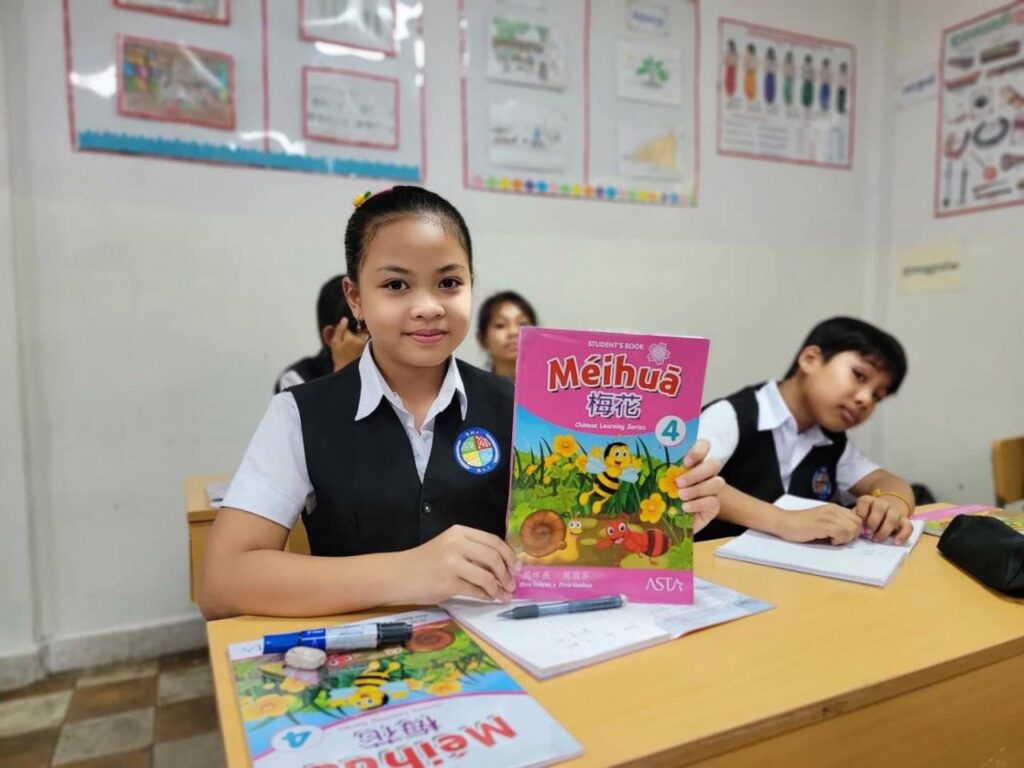
As bilingual and multilingual education continues to expand globally, schools and education providers need learning solutions that are not only academically strong, but also practical for non-native learners and adaptable across international classrooms.
ASTA Ilmu Publishing offers licensing and partnership opportunities for institutions, distributors, and education organizations looking to bring high-quality English and Mandarin programs into their markets.
With programs specifically designed for non-native classrooms, structured learning progression, and comprehensive teacher support, ASTA provides language learning solutions that help schools build confident, future-ready learners.
To explore partnership or licensing opportunities, visit www.astailmu.com/partners