

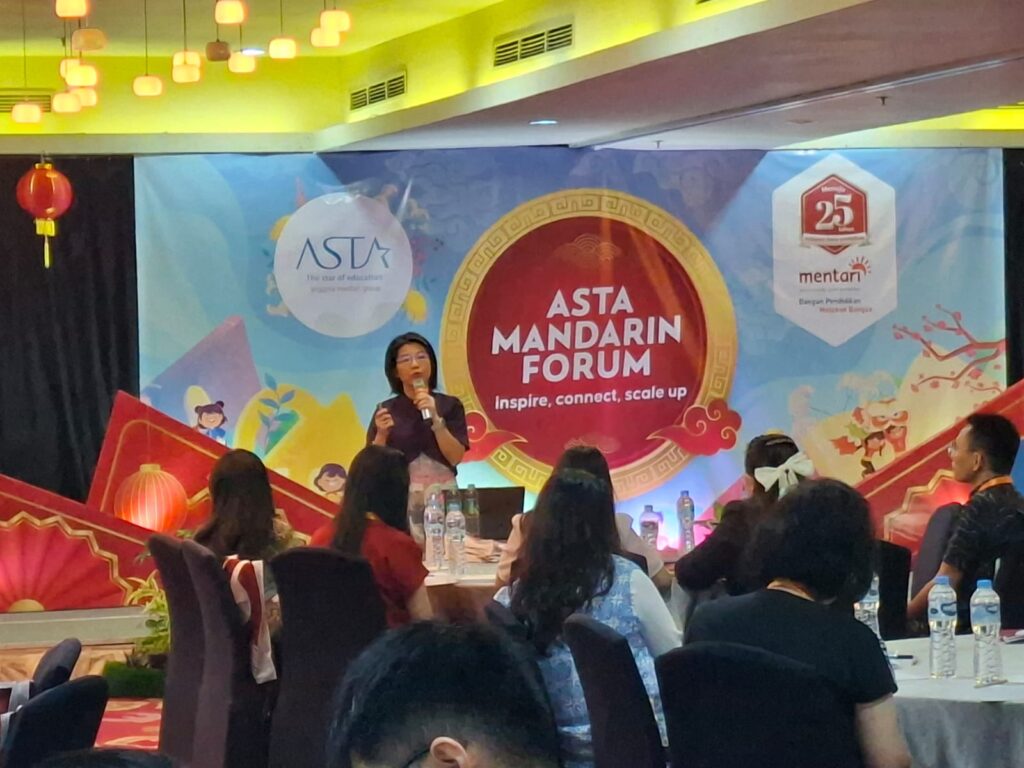
In recent years, interest in learning Mandarin Chinese in Indonesia has grown significantly. Mandarin is no longer seen merely as an additional language skill, but as a global competency that opens doors to education, business, and international opportunities. Alongside this growth, approaches to language learning have also evolved.
One of the key figures contributing to this transformation is Elice Chandra, an educator with over 26 years of experience in Mandarin teaching. Through her long-standing involvement with ASTA Mandarin since 2017, she has played an important role in shaping a more communicative, contextual, and learner-centered approach to Mandarin education.
A 26-Year Journey in Mandarin Education
Elice Chandra is not only a Mandarin teacher but also an active researcher and analyst in the field of language education. Her passion lies in understanding how Mandarin education can evolve and become more accessible to non-native learners, especially in Indonesia where exposure to Mandarin in daily life can still be limited.
Since 2017, she has been involved with ASTA Mandarin as a seminar mentor for teachers. She later became an editor for secondary-level Mandarin textbooks (Chunhui series), and since 2024, she has taken on the role of consultant for ASTA Mandarin Champion.
Her extensive experience allows her to deeply understand what makes language learning effective, particularly for learners who are not exposed to Mandarin as a first language.

The Core Philosophy: Mandarin as a Tool for Communication
A central belief held by Elice is that the essence of language is communication. Therefore, Mandarin learning should not be limited to memorizing grammar rules, vocabulary lists, or sentence structures.
Within the ASTA Mandarin approach, the primary goal is communicative competence. Students are not only taught to understand Mandarin theoretically, but also to use it actively in real-life contexts.
Unlike traditional methods that heavily emphasize grammar accuracy and memorization, ASTA Mandarin integrates authentic, context-based texts. These materials are designed to reflect real-world language usage rather than textbook-only expressions.
This communicative orientation allows students to experience a sense of achievement when they are able to express themselves in Mandarin, fostering intrinsic motivation and long-term engagement.

Making Mandarin Learning Enjoyable and Meaningful
According to Elice, one of the most important aspects of language learning is creating a sense of enjoyment throughout the process. Learning should not feel like a burden, but rather an engaging and rewarding experience.
ASTA Mandarin emphasizes learning that feels natural and enjoyable. Instead of focusing solely on correctness, students are encouraged to explore, experiment, and communicate freely.
This approach nurtures intrinsic motivation, where students are driven not by exams or grades, but by curiosity and the satisfaction of being able to communicate in a new language.
Ultimately, the goal is not just completing learning materials, but achieving true language mastery. One of the strongest advantages of ASTA Mandarin textbooks is that they are specifically designed for non-native Mandarin learners.
Designed for Global Non-Native Mandarin Learners
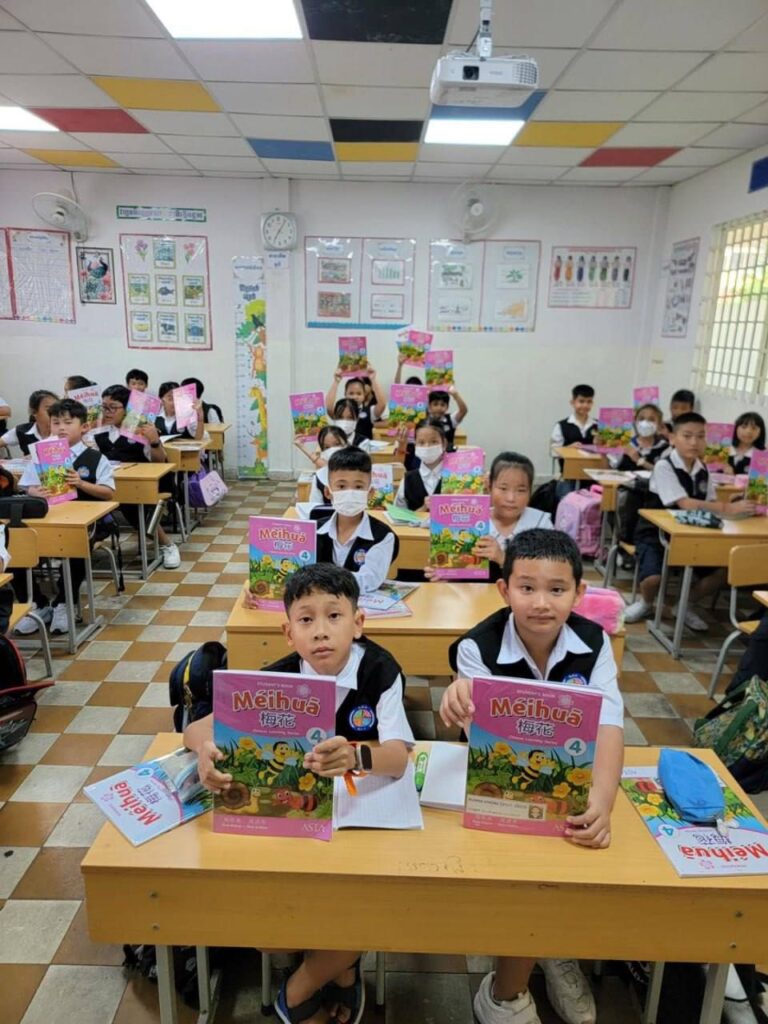
Elice explains that the materials are not intended primarily for native speakers, but for learners who use Mandarin as a second, third, or even fourth language. This design philosophy makes the learning experience more accessible, practical, and aligned with the real challenges faced by international students.
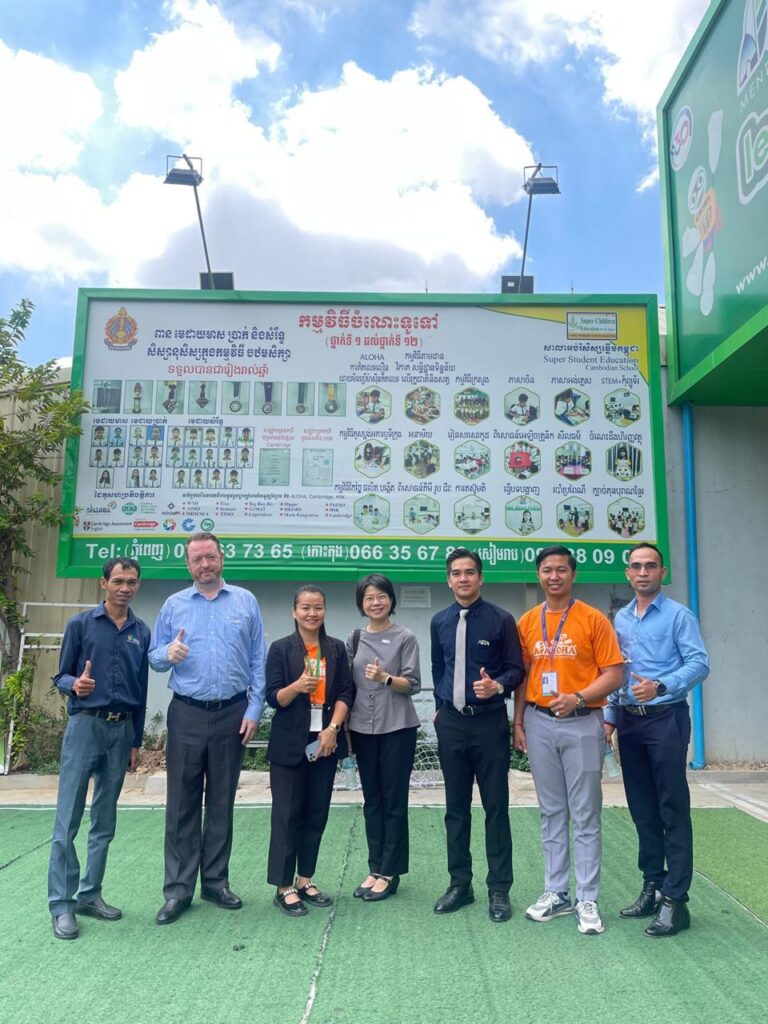
Because of this approach, the ASTA Mandarin series has gained relevance beyond Indonesia. It has also been adopted and used in countries such as Thailand and Cambodia, where Mandarin is commonly learned as a foreign language rather than a native tongue. Educators and learners in these countries resonate strongly with ASTA’s communicative and context-based approach, as it aligns with their classroom realities and exposure levels.
This global adoption reflects how the ASTA Mandarin series meets a shared need among non-native learners: limited daily exposure to Mandarin-speaking environments and the difficulty of understanding language in real-life contexts. By addressing these challenges directly, the materials become highly adaptable across different countries and education systems.
The content is carefully designed to reflect these realities, ensuring that learners are not overwhelmed by overly theoretical structures but instead supported through practical, situational language use. This perspective comes from real teaching experience and lived learning journeys, making the approach grounded in actual classroom needs rather than abstract theory.
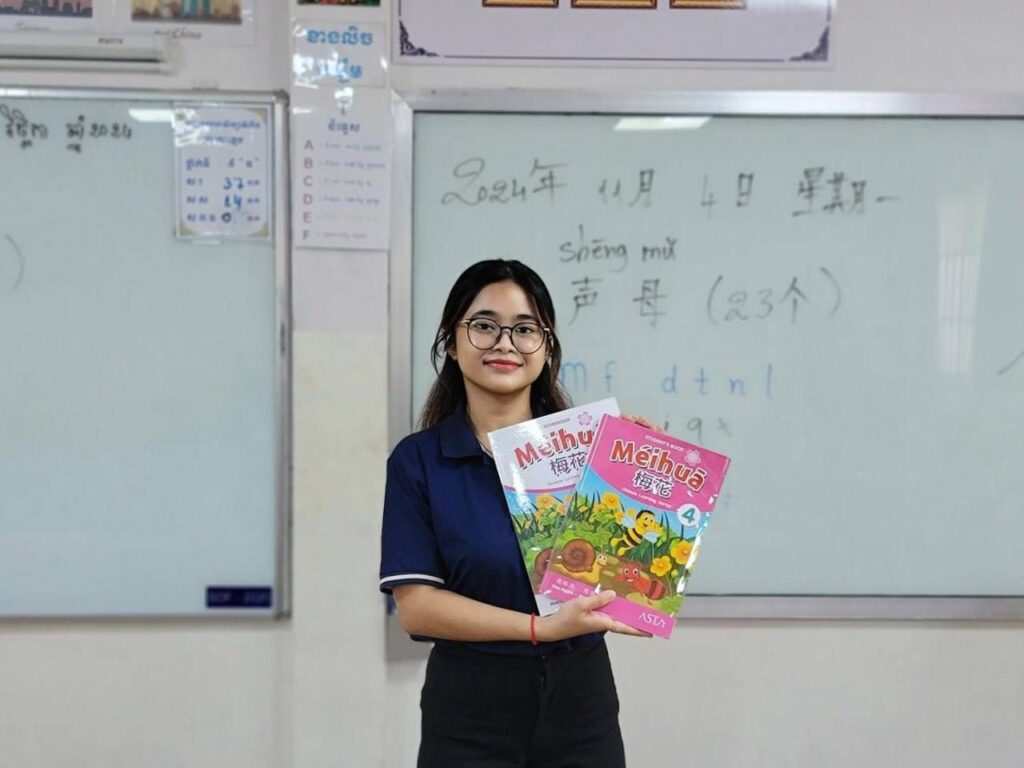
Key Features of ASTA Mandarin Learning Materials
ASTA Mandarin stands out due to its interactive, student-centered learning design. The materials go beyond traditional textbooks and introduce engaging, meaningful learning experiences.
1. Life-Based Learning Activities
Lessons are designed around real-life contexts, allowing students to understand how Mandarin is used in everyday situations.
2. Engaging Learning “Hooks”
Each lesson includes creative hooks that capture students’ attention, making them feel like they are participating in activities rather than studying in a traditional sense.
3. Multi-Modal Learning Approaches
ASTA Mandarin integrates different learning styles—kinesthetic, visual, linguistic, and spatial—through songs, storytelling, drama, games, and exploration activities.
4. Real-Time Communication Tasks
Students are encouraged to perform real-world tasks such as becoming YouTubers, conducting interviews, or engaging in role-play scenarios. These activities build confidence and practical communication skills.
With these features, Mandarin classes become something students look forward to, rather than something they feel obligated to attend.

A Key Learning Principle: Don’t Be Afraid to Make Mistakes
Elice emphasizes one essential principle in language learning:
“Be brave enough to make mistakes.”
In her view, mistakes are not failures but necessary steps in the learning process. Speaking, writing, and experimenting with language are all part of building fluency.
The more mistakes a learner makes, the more opportunities they have to improve. Conversely, avoiding mistakes often means avoiding practice altogether.
This philosophy is deeply embedded in the ASTA Mandarin approach, encouraging students to be confident, active, and unafraid of imperfection.
Toward a More Human and Communicative Mandarin Education
Through her decades of experience, Elice Chandra brings a transformative perspective to Mandarin education in Indonesia. Together with ASTA Mandarin, she advocates for a shift from rote memorization to meaningful communication.
By integrating interactive learning, real-world context, and learner-centered design, ASTA Mandarin represents a new direction in language education—one that is both globally relevant and locally grounded.
Ultimately, learning Mandarin is no longer just about mastering grammar or passing exams. It becomes a journey of communication, confidence-building, and meaningful connection with the world.
About ASTA Ilmu Publishing
Founded in 2011, ASTA Ilmu Publishing is an Indonesian educational publisher specialising in integrated K–12 textbooks and storybooks. As part of Mentari Group, ASTA collaborates with experienced educators, writers, and illustrators from diverse international backgrounds to develop programmes grounded in internationally recognised methodologies. Today, ASTA Ilmu Publishing’s publications are licensed and distributed in over 25 countries worldwide.