

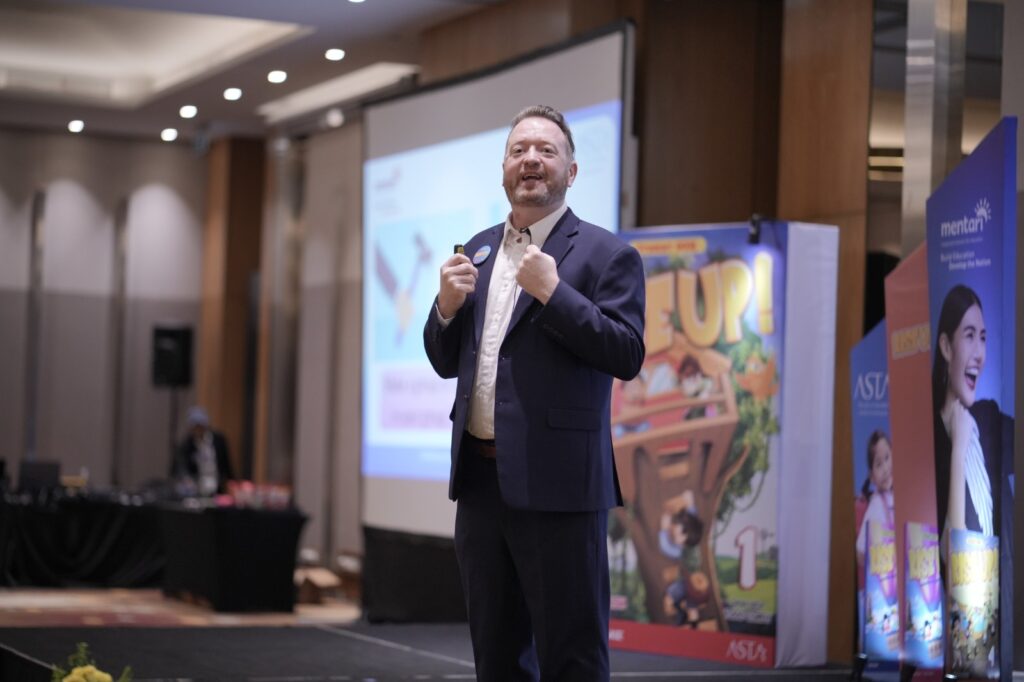
Learning English can be both exciting and challenging, especially for young learners navigating new vocabulary, unfamiliar structures, and the confidence required to communicate in a second language. For many students, English learning becomes stressful when lessons focus heavily on memorisation and abstract grammar rather than meaningful communication.
At ASTA Ilmu Publishing, learning English is designed differently. Through structured methodologies, engaging visuals, and communicative learning experiences, ASTA programmes aim to make English learning more engaging, meaningful, and memorable.
In this interview, Todd Cordy, experienced educator and author of Rise Up! and Rainbow English, shares insights into how ASTA’s English programmes support students across different age groups and learning stages.
The Common Challenges in Learning English
Across classrooms worldwide, students often face similar challenges when learning English. According to Todd Cordy, three key challenges consistently emerge: confidence, retention, and connection.
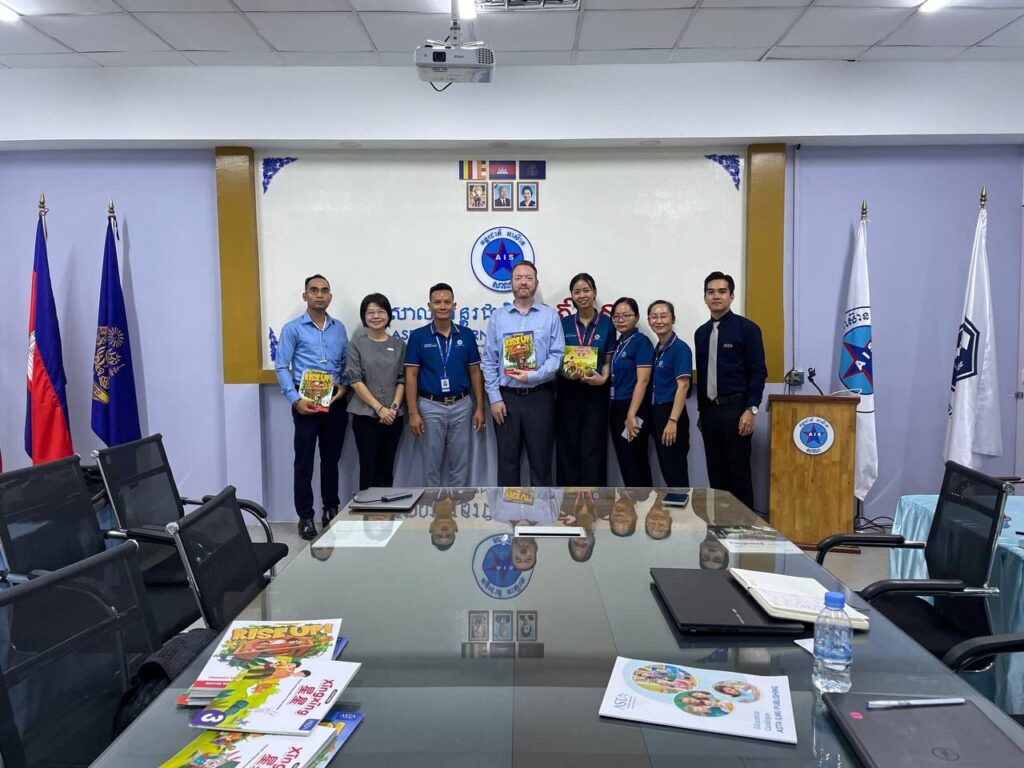
First, many learners struggle with confidence. Students often worry about making mistakes, which limits their willingness to speak and participate in class discussions. This hesitation can slow language development and reduce classroom engagement.
Second, retention becomes a challenge when students are introduced to new vocabulary or structures without sufficient practice. Students may understand a new language during lessons but struggle to remember it later if learning is not reinforced systematically.
Third, connection plays a crucial role in motivation. When content does not feel relevant, age-appropriate, or meaningful, students quickly lose interest. Even after years of English instruction, learners may experience slow progress if they are not actively engaged in the learning process.
These challenges appear differently across age groups. Young learners benefit from routines and multisensory input, primary learners require engaging contexts and functional language, while teenagers need authentic and relatable content. Mixed-ability classrooms further amplify these challenges, making structured and scaffolded learning materials essential.
ASTA’s Approach: Functional Language for Real Communication
To address these challenges, ASTA programmes focus on functional language — teaching English as a practical tool for communication rather than abstract grammar rules.
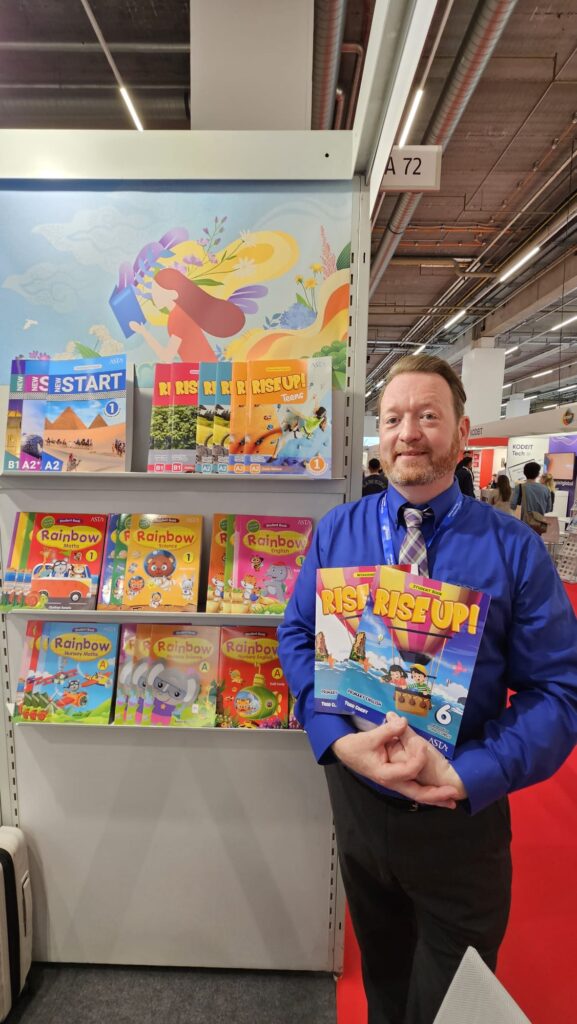
Across all ASTA English series, language is presented systematically and practised through varied, multimodal activities. This structured approach helps students build confidence gradually while reinforcing learning through meaningful repetition.
Todd Cordy explains that ASTA materials use clear models, scaffolded tasks, and purposeful repetition to help students internalise language naturally. This method supports long-term learning and encourages students to actively use English in real-life contexts.
This consistent pedagogical framework ensures that learners develop language skills step by step, building both competence and confidence.
Engaging Young Learners: Early Literacy Through Play and Interaction
For preschool and early learners, ASTA programmes such as Rainbow English and Rainbow Nursery English focus on developing early literacy skills through engaging and interactive learning experiences.
Early literacy is developed through structured components such as:
- Phonics Time
- Story Time
- Let’s Talk
- Let’s Sing
Songs with actions support memory through Total Physical Response (TPR), while sticker activities, tracing exercises, and visual tasks help young learners develop fine motor skills, phonics awareness, and early communication skills.
These multisensory learning experiences make English learning enjoyable and accessible, helping young learners build confidence from the beginning.
Primary Level: Story-Based Learning That Builds Communication Skills
At the primary level, Rise Up! introduces a story-based learning approach combined with visually rich pages and structured learning progression.
Each unit in Rise Up! follows a six-feature structure:
- Vocabulary
- Language
- Listening
- Reading
- Speaking & Writing
- Activity
These features guide students toward a communicative goal, such as asking for directions, describing feelings, or giving opinions. This structured progression helps learners develop balanced language skills while maintaining engagement.
In addition, Rise Up! includes AIM tasks that encourage students to use English in meaningful contexts. Students also encounter multiple listening opportunities per unit, helping strengthen listening comprehension and overall communication skills.
This systematic approach supports steady skill development while keeping learning intuitive and engaging.
Secondary Level: Supporting Teen Learners Through Relevant Content
For secondary learners, Rise Up! Teens focus on reading literacy, communication skills, and personal development.
Reading literacy is developed through a three-step scaffold:
- Pre-reading vocabulary and guiding questions
- Supported reading with visuals and audio
- Post-reading discussion connecting to students’ lives
This structure helps students develop comprehension skills while encouraging deeper reflection.
The Teen Corner feature also encourages learners to reflect on emotions, relationships, and social responsibilities. These relatable topics increase engagement and support holistic development beyond language learning.
This approach helps teenage learners connect English learning to their own experiences, making language learning more meaningful and relevant.
The Role of Teachers in the ASTA Approach
ASTA learning materials are designed to be teacher-friendly and classroom-ready, providing a structured roadmap while allowing flexibility for different learning needs.
Teachers can adapt lessons by:
- Adjusting pacing
- Differentiating tasks
- Encouraging personalisation
- Extending learning activities
This partnership between structured materials and teacher facilitation helps create dynamic learning environments where students feel supported and motivated.
The Teacher’s Guides also provide additional extension ideas, allowing teachers to further customize lessons based on classroom needs.
Nurturing a Love for Learning English
Based on his experience, Todd Cordy highlights several key strategies for nurturing students’ love of learning English:
- Celebrate small achievements to build confidence
- Provide meaningful communication opportunities
- Create a supportive learning environment
- Use engaging and visually rich learning materials
When students feel supported and see progress, their motivation naturally increases.
For young learners, story-based programmes create joy and curiosity. For primary learners, structured progression builds confidence. For teens, relevant topics and real-life connections encourage deeper engagement.
This holistic approach supports long-term learning and helps students develop confidence in using English.
Making Learning Meaningful and Memorable
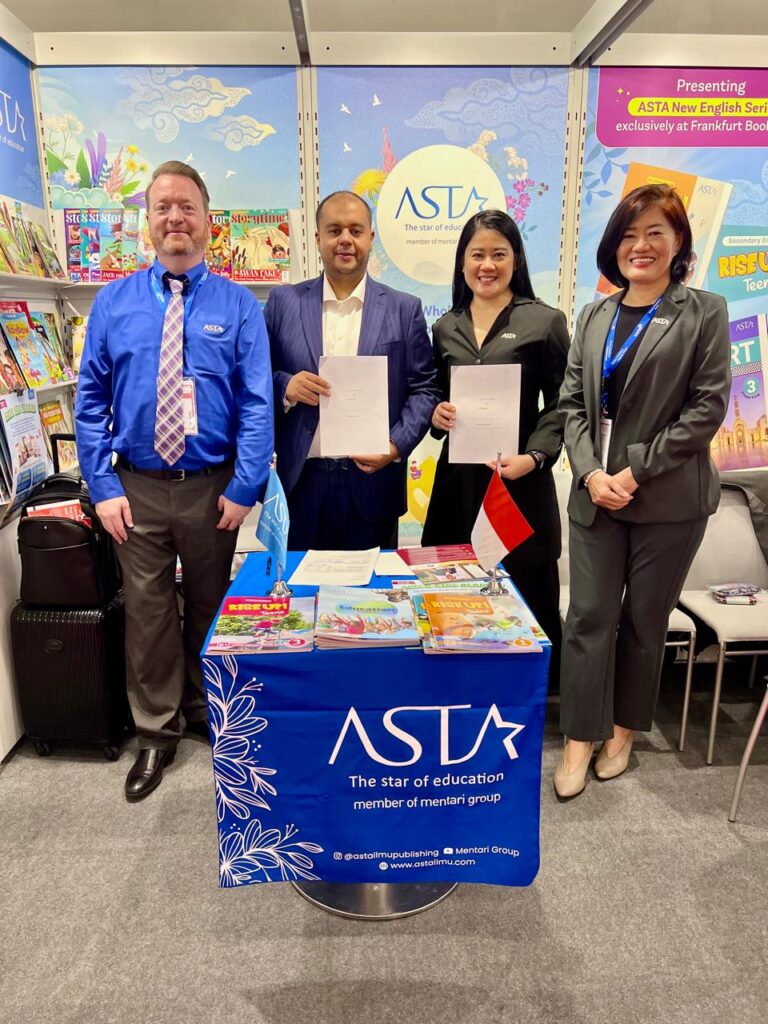
Across all levels, ASTA programmes aim to make English learning engaging, structured, and meaningful. By combining functional language, scaffolded learning, and engaging content, ASTA helps students develop communication skills naturally.
As education continues to evolve globally, engaging and effective language learning materials play an important role in supporting students’ success. ASTA Ilmu Publishing remains committed to developing programmes that make learning English not only achievable, but also enjoyable and memorable.
About ASTA Ilmu Publishing
Founded in 2011, ASTA Ilmu Publishing is an Indonesian educational publisher specialising in integrated K–12 textbooks and storybooks. As part of Mentari Group, ASTA collaborates with experienced educators, writers, and illustrators from diverse international backgrounds to develop programmes grounded in internationally recognised methodologies. Today, ASTA Ilmu Publishing’s publications are licensed and distributed in over 25 countries worldwide.